Tag: art

  • From Nostalgia to New Heights: A Journey Forward for Music in Sierra Leone

    From Nostalgia to New Heights: A Journey Forward for Music in Sierra Leone

    The past weeks have been nothing short of remarkable for Sierra Leone’s music scene. From groundbreaking singles to historic performances, Sierra Leonean artists are making waves both locally and internationally.

    Music producer and DJ, Dito Freaky, has taken a bold step into the spotlight with his debut single, Ann Marie.
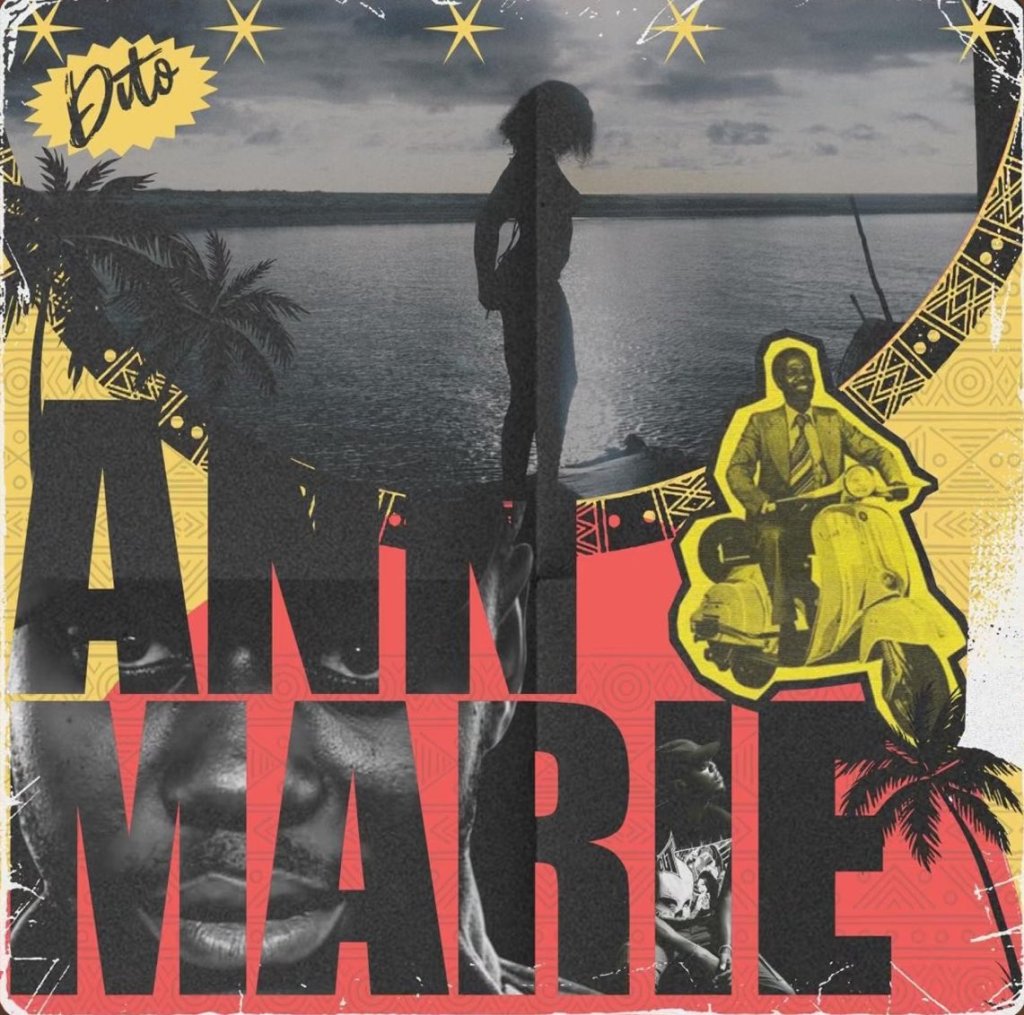
    The song is a nostalgic masterpiece, cleverly sampling the iconic African hit Mario by Congolese musician Franco, popular in the 80s and 90s. Dito’s genius lies in his ability to merge the timeless essence of old-school African rumba with contemporary rhythms, creating a track that resonates across generations. “Ann Marie” is a journey through time, blending the rich musical heritage of West Africa with modern beats that are sure to get everyone dancing.

    Next up is Tar1k, whose single Alima has captivated audiences with its genuine and emotional expression.

    His delivery was so authentic that it sparked a flurry of conspiracy theories and unsolicited advice from friends and fans! In response to what inspired him to write Alima, Tar1k says he’d been thinking about creating a song about a “defined female subject”, reminiscent of older Sierra Leonean music traditions, characterised by emotional depth and vibrant energy. The result is Alima, a song that taps into a “mix of hurt, longing, ego and anger”, painting a picture that represents Sierra Leonean love songs from a bygone era.

    Drawing a connection between Tar1k’s “Alima” and Dito’s “Ann Marie,” one might jest that Sierra Leonean women have been muses since the beginning of time, inspiring countless hits and heartfelt lyrics. Classics like Jimmy B’s “Khadija”, Dry Eye Crew’s “Mabinty”, Alonzo’s “Mariama”, Emmerson’s “Elizabeth”, all from the 2000s, further prove how the charm and mystique of Sierra Leonean women continue to inspire and shape the nation’s music scene. Keep up the good work ladies!

    Speaking of Emmerson, he has once again proven why he is the GOAT! Emmerson performed his most recent single Strawberries on Ice, featuring Nigerian megastar Davido, at a pre-event showcase for the 2024 BET Awards in Los Angeles, USA. His collaboration with Davido and another song, Stick to the Plan, with American artists Lola Brooke and Howard Hewett, signify his foray into the broader African market and world stage. Emmerson’s journey is a testament to his relentless dedication and talent, making Sierra Leone proud with every note.

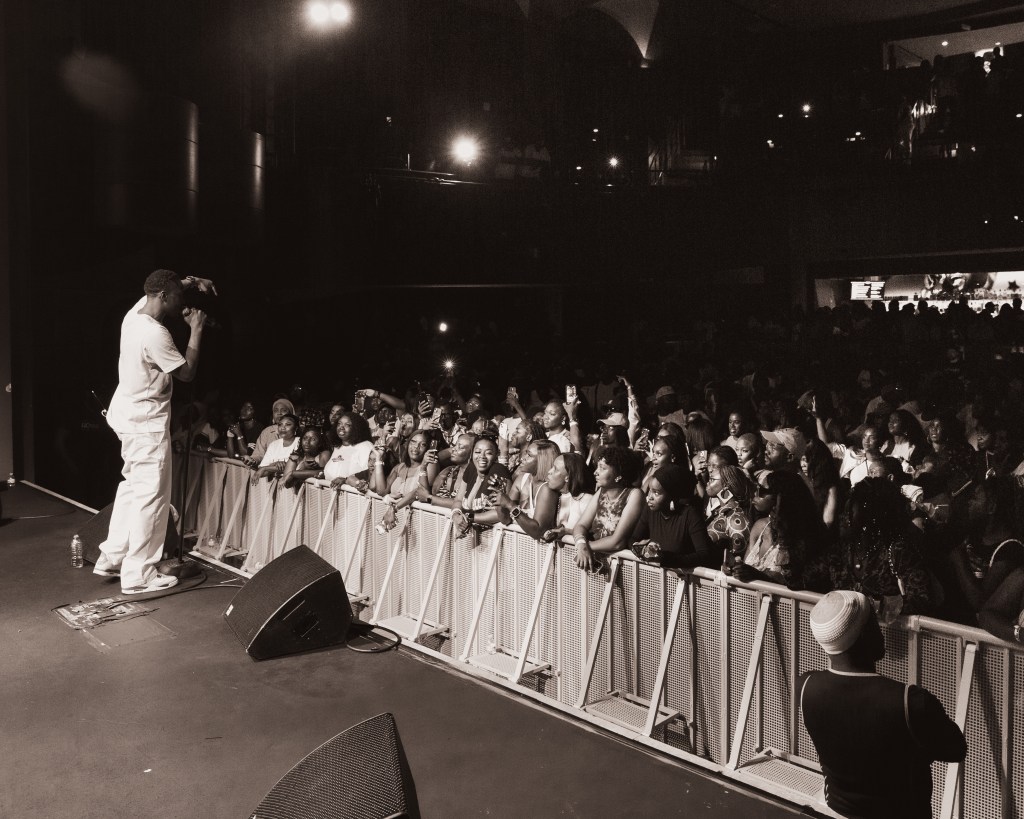
    Adding to the list of historic achievements is Drizilik, who has become the first Sierra Leonean artist to host a live music concert at the iconic Howard Theatre in the US. Drizilik headlined a star-studded lineup of emerging talent and household names in the Sierra Leone music industry, accompanied by the Freetown Uncut Band. Hundreds of Afrobeats and hip-hop lovers from Washington DC, Maryland, Virginia, and beyond came out to celebrate Sierra Leone’s best musicians from Freetown and the DMV. This milestone is not just a personal triumph but a defining moment for Sierra Leonean music, signalling our growing influence and reach in the global music arena.
    The music scene in Sierra Leone is rapidly evolving, fostering a growing community of creatives and expanding spaces where artists can collaborate and perform. Artists now have greater opportunities to produce high-quality music and reach wider audiences through digital platforms. However, as the industry grows, creating an environment where artists can refine their talent and skills, and navigate the complexities of the music business will be crucial for sustained success.

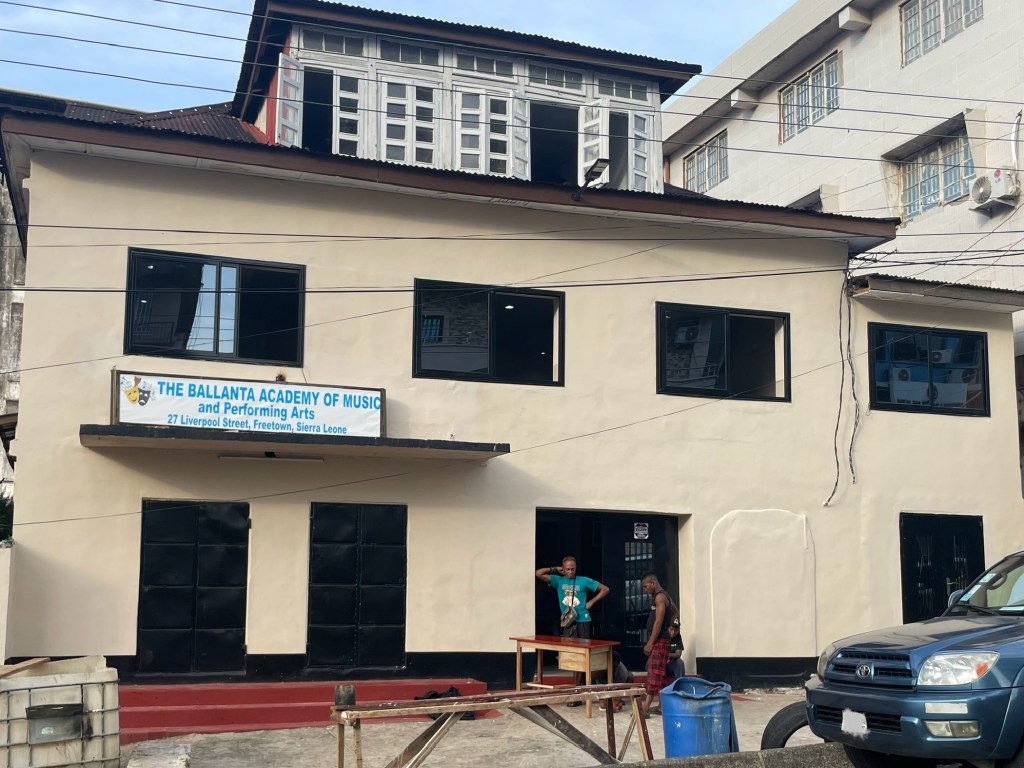
    In this evolving landscape, the refurbishment of the Ballanta Academy of Music and Performing Arts comes at the right time. Established in 1995, Ballanta Academy is the oldest music learning institution in the country, and it has recently reopened its doors to the public with exciting new developments. New courses aimed at enhancing professional development in music, dance, theatre arts, and film production will soon be available, providing a solid foundation for aspiring artists. 
    The past weeks have indeed held golden moments for Sierra Leone music. As artists continue to break new ground and push boundaries, they inspire a new generation of musicians to dream bigger and reach higher. We can absolutely look forward to an era of growth and opportunity for musicians and a thriving future for Sierra Leone’s entertainment industry.

  • Will Sierra Leone’s Young Cabinet Reshape Governance? Insights from “The New Face of Salone”

    Will Sierra Leone’s Young Cabinet Reshape Governance? Insights from “The New Face of Salone”

    A backdrop showing the film poster which is a animated photo of the seven young ministers. It reads: A TAP Films Production, The New Face of Salone.

    “The New Face of Salone” is a film that tracks Sierra Leone’s and Africa’s youngest cabinet in their first week in Office, introducing key members: the youngest being the Minister of Communications, Innovation and Technology, Salima Bah (32); the Chief Minister, David Sengeh (36); the Deputy Minister of Health, Dr Jalikatu Mustapha; the Minister of Technical and Higher Education, Dr Ramatulai Wurie; the Minister for Foreign Affairs and International Development, Timothy Kabba; the Minister for Agriculture and Food Security, Henry Kpaka; and the Minister for Information and Civic Education, Chernor Bah — all under 40.

    The film contextualises this cabinet within the broader African landscape, highlighting the significance of the ministers’ success not only for Sierra Leone but for youth leadership continent-wide. It also humanises governance by portraying the ministers’ emotional journey as they grapple with their new responsibilities.

    At the film screening on Friday evening, I recalled some questions that came to mind when the cabinet was initially announced: Are these young people being set up to fail? Will they bring a different style to governance from what we know? Will their qualifications and competencies change governance in Sierra Leone and overcome decades of political problems, corruption and stunted growth?

    Well, about seven months or so have passed since the cabinet’s formation and little change is evident. Transparency and accountability are still quite lacking amongst many other things, while the basic needs of the people continue to go unmet. Political allegiance often overrides logic and honesty, hindering the ability to give and take constructive criticism, dialogue, and compromise.

    Citizens’ “blind support” worsens the situation, challenging my previous belief that it was primarily the older generation who were entrenched in their ways, unwilling to transcend party lines. Having witnessed similar patterns of blind loyalty among peers, I’ve come to realise this issue transcends generational divides, levels of literacy, education, exposure, and many other societal factors.

    I can acknowledge nonetheless that fanatical devotion to political parties is quite deeply ingrained in our body politic and will not change overnight. Despite their youth and vigour, I know the young cabinet cannot single-handedly overturn entrenched issues. However, they can certainly lead by example if they prioritise transparency, accountability, and integrity in their actions and decisions. By demonstrating a willingness to challenge the status quo rather than support partisan agendas, they can begin to address the systemic challenges, set a precedent for responsible leadership and work towards meaningful reforms.

    The ministers sat on stage during the Q&A with the screen behind them showing the film poster.

    “We will deliver”, Chief Minister David Sengeh’s mantra echoes persistently throughout the film. But amidst this assurance lies a shadow of public scepticism. Will this government truly fulfil the needs of the people as promised? “How can you be so confident you will deliver…?” queried a young boy from the audience, directing his question to the panel of ministers who sat on stage for a Q&A session after the screening.

    In my view, if this young cabinet falls short of delivering tangible results, it should at least emphasise to us the reality that as young people, we are also accountable for the direction Sierra Leone takes. The film portrays this fact glaringly by presenting this cabinet as a profound opportunity for young people to step into the leadership roles we have longed for and shape the future of our nations. Whether serving as appointed leaders or as citizens we share a collective responsibility. Therefore, we must reflect on our actions and intentions.

    As young leaders, are we genuinely serving the nation or prioritising our political ambitions? Are we placing the needs of the people above all else? How do we reconcile party loyalty with the principles of transparency, accountability, and integrity? Are we setting a positive example or perpetuating the same old political narratives? As young citizens, are we consistently advocating for transparency and accountability across the board, or only when convenient, such as when it does not involve our friends and family? Does our political allegiance cloud our judgement when prioritising Sierra Leone’s interests? How can we ensure we speak truth to power, even when it is uncomfortable or risky? What role can we play in supporting our leaders (friends & family) while also holding them accountable to their promises?

    Although this film provides a compelling view of young leadership it somewhat also presents a sanitised view of governance. This is understandable, considering it only captures the first few days at the beginning of the ministers’ term in office. Additionally, I can appreciate that spotlighting the positives amidst Africa’s prevailing narratives of conflict and corruption reflect the editorial stance of The African Perspective (TAP), the film’s production company.

    Overall, “The New Face of Salone” offers a fresh exploration of youth leadership, urging us to engage critically, act with integrity, and strive for a better tomorrow, together. If you are a sceptic like me, you might wonder whether the contributions in the film are indeed a genuine attempt to inspire proactive citizenship or a form of persuasion to cultivate empathy towards the government. I think whatever the intent, the fact remains: there are inherent collective responsibilities in governance, and we all have a stake. So, how can we leverage this understanding to drive meaningful change?